
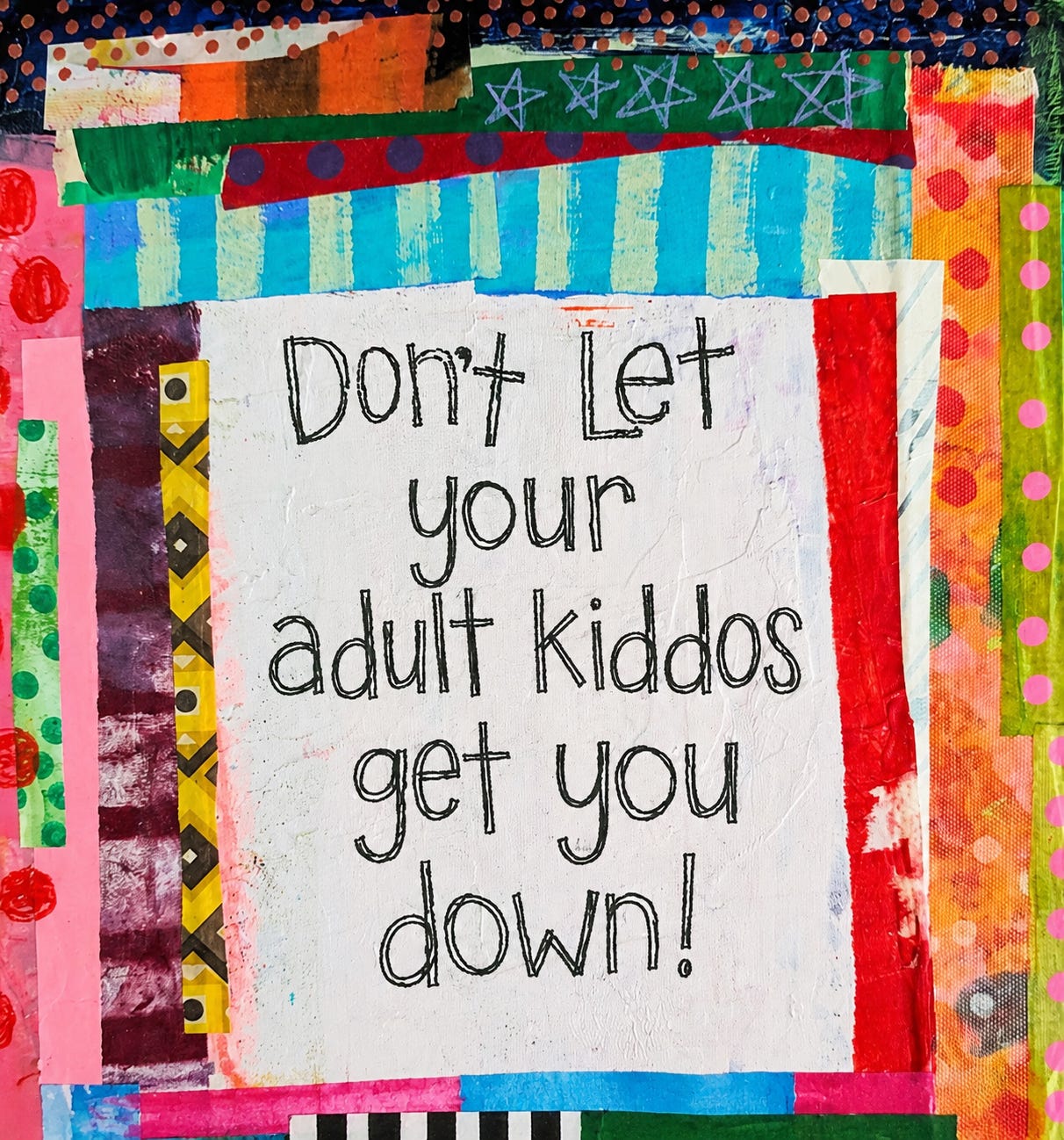
I think I am a slow learner.
I have been a mother since 1970 – that’s 56 years. You think I would have perfected my role by now.
Nope.
But I feel better knowing that my good friends and neighbors aren’t so savvy about parenting their adult kids either.
My pal Georgia is visiting her daughter, who lives in Tennessee. One morning she grabs a coffee mug from a top shelf in the kitchen and notices a digital calendar right on the counter below the mugs. Not thinking very much about it, she takes a closer look and sees that in two weeks her daughter is having her tubes tied.
She is shocked. “How could she not share that with me,” she wonders. “I’m her mother, for gosh sakes!”
When her daughter gets home from work, my friend casually mentions it to her adult daughter.
Her daughter’s reaction shocks her.
“Mom, I can’t believe you’re asking me that,” she snaps back. “It’s so private and you are being so nosy.”
Georgia assumed – because the procedure was on the openly displayed digital calendar in the kitchen – that it was fair game to talk about. (And she IS her mother. Didn’t that mean SOMETHING???)
Here’s the latest thing I learned:
Apparently if you are at your adult child’s home and you happen to glance at their digital calendar, it is in very poor taste to remark on something written on it. Ditto if a container of prescription pills is left lying about, inquiring about that is off limits too. (That one I actually knew.)
If we, as parents of adult children, want to prevent being sidelined by our adult children, our role has to shift from the manager mode to trusted ally role.
And what in the heck does that mean?
Literally, I guess that means we are dependable, supportive and firmly in their corner. We are honoring their boundaries and we aren’t judging them. And we are not supposed to get our feelings hurt when we feel left out of their major decisions.
I’m sorry, but that’s a pretty tall order.
Another friend of mine received a phone call from her ten-year-old granddaughter shortly after returning home from summer camp.
“So, Amy, did you have fun at camp?” my friend asked.
“Yeah, I did, Grandma,” she replied.
“Well,” my friend went on, “Do you think you’ll see any of your camp buddies who live near you over the winter?”
“Nah,” she answered. “I don’t think so.”
My friend let it go and didn’t press the issue,but was curious about her granddaughter’s perceived lack of connection with her fellow campers.
She called me later, seeking my advice:
A. Should she re-open the chat with her granddaughter?
B. Or should she leave it alone?
C. Or should she further question her own daughter, suggesting that maybe her daughter should dig a little deeper into Amy’s camp experience and find out why she wasn’t particularly interested in follow- up with her fellow campers?
Two weeks ago, I would have chosen either A or C. After reading parts of the book Sidelined by Your Adult Children by Roseanne Rosen and listening to “Parenting Adult Children Today”, a podcast by Catherine Hickem, I’m a firm believer in leaving those potentially combustible situations alone. It seems to me my friend would be perceived as a meddling helicopter grandma. And I can just hear my own son saying to me in exasperation, “OMG Mom, get a life!”
I’m revamping my mindset. I am beginning to see through the murkiness.
We need to treat our adult children as adults.
And “the experts” advise the following:
We need to give advice ONLY when asked.
We need to release outdated expectations.
We need to listen without an agenda.
We need to offer support, not rescue.
We need to offer unconditional love.
My neighbor Pete recently learned through an off-hand, overheard comment that his grandson, John, is who was super excited about accptace into the graduate program of his choice in the fall was having second thoughts about going. Naturally Pete is both concerned and surprised.
In my “newly found infinite wisdom” (Hee Hee), I am going to suggest to Pete that he approach John’s father (his son) and share what he knows and ask if he would feel comfortable discussing John’s situation with him.
I’d advise Pete to respect his son’s wishes about whether he wants to share why his son may not be graduate school bound this fall.
Should I hang up my shingle?
Or stick to writing?
Let’s hear from YOU about your experiences parenting an adult son or daughter.
Keep Preserving Your Bloom,