
The book Theo of Golden is all the rage. I planned to continue reading it on my London-bound flight.
Seated early in the boarding process, I keenly observed the passengers boarding the plane – all who were rapidly passing my row. I spotted a woman carrying Theo Of Golden and immediately raised my hand – holding up my copy – to signal I, too, was a fan of this newly released book. She, in turn, pointed to a woman three people back. And wouldn’t you know it? She, too, had a copy in her hand. We smiled. We gave each other thumbs-up. And they went to their seats and I eagerly opened my copy.
Page 118 stuck with me – when Theo, the main character, is trying to understand what makes “good art.”
His companion, Asher, the portrait artist, answers this way:
“…if a work of art makes us see something familiar in a new way or makes us feel something we ought to have felt all along …maybe then it qualifies as ‘good.’”
That observation lingered in my thoughts as we toured London.
The Churchill War Rooms are part of the Imperial War Museums in central London and comprise the actual underground rooms where Churchill and his legion of government officials directed Britain’s war efforts during World War II.
For two intense hours, my husband and I wandered through the many corridors – reading the signs, listening to the audio explanations, marveling at the sheer feats accomplished in that underground bunker over a period of bomb-riddled years.
At the gift shop, on my way out, I stumbled on overflowing shelves filled with books on British culture, history, war maneuvers, heroes, local recipes, and natural wonders.
This one caught my eye:
The Poppy
A Symbol of Remembrance
By Laura Clouting
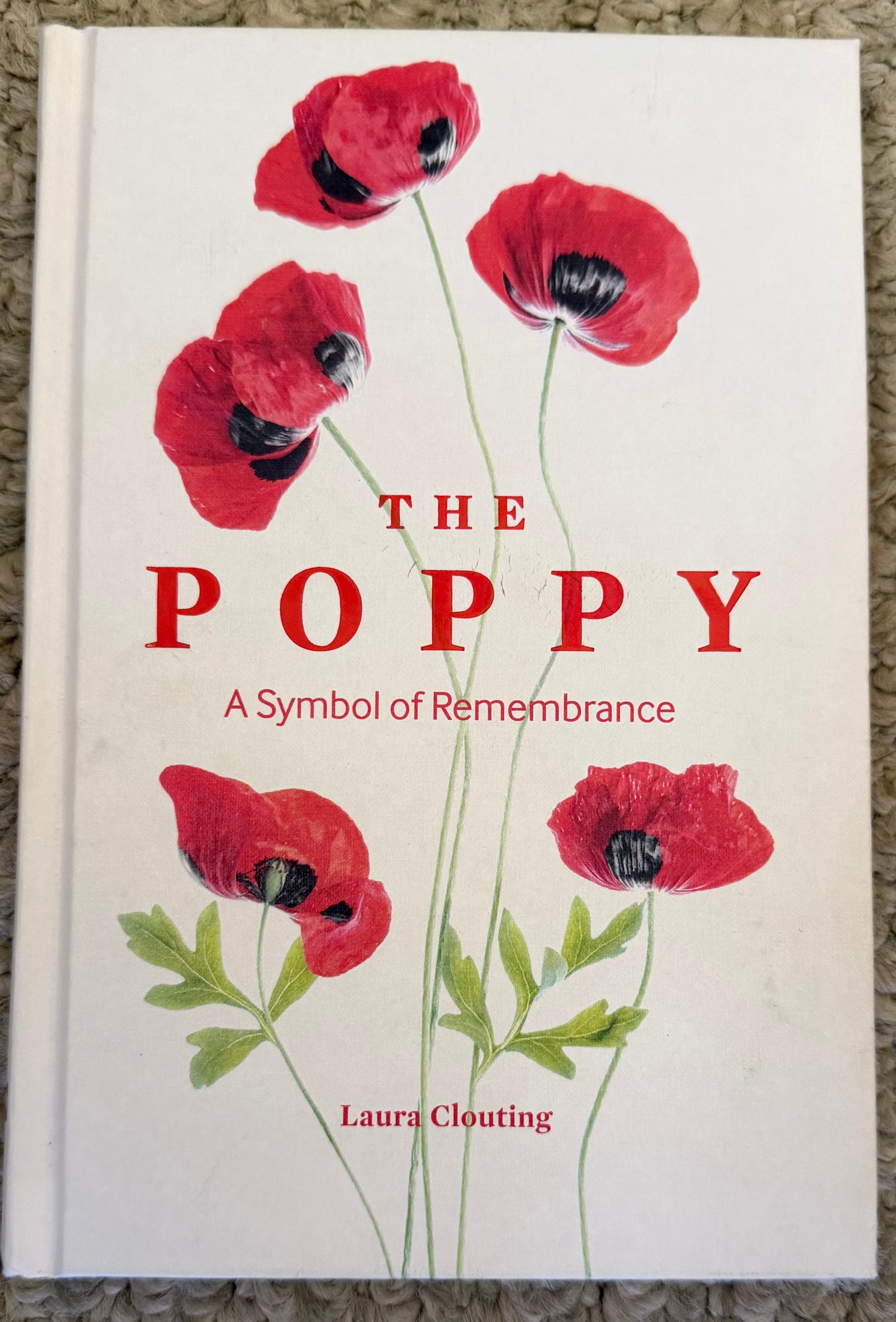
And true to what makes a good piece of art, so true on what makes a good book. After reading this book, I will never look at the bright red flower named a Poppy in the same way.
I remember hearing the heroic tale of my Uncle Case, who served in World War I, being left for dead on a battlefield after sustaining a massive head wound. After the enemy stopped probing for live bodies to finish-off the task of destroying US troops, they left the killing field. My uncle then crawled his way back to base camp and was treated and eventually restored to good health.
That very lucky survivor tale stayed with me but I had no idea of the huge number of lives lost during 1914 to 1918 nor to the vast number wounded or who became mentally ill as a result of their experience. For Britain it was a “total war” in terms of human losses, monetary costs, political upheaval and the threat to national survival, as Clouting so powerfully points out.
One symbol, Clouting notes, came to embody the collective mourning and memory of World War I more powerfully than any other: The Poppy.
How????? And Why?????
Engendering unprecedented destruction, high explosive shells all along the 400 mile Western Front tore into the earth and its violence had a very surprising effect: stirring up the ground – thus creating the perfect condition for poppies to grow. And thrive. Tree trunks were splintered. Broken branches and wreckage covered the battlefields. In all directions, destruction dominated one’s range of vision.
The red corn poppy thrived in such conditions – putting on an extravagant and wildly colorful array of blooms
The sheer beauty of the poppy amidst a plethora of death and destruction was beautifully memorialized by Canadian physician Lieutenant Colonel John McCrae, who worked in a dressing station close to the front line in late 1915. McCrae was moved to write this poem following the death of a close friend.
In Flanders Fields
In Flanders fields the poppies grow
Between the crosses, row on row,
That mark our place: and in the sky
The larks, still bravely singing, fly
Scarce heard amid the guns below.
We are the dead. Short days ago
We lived, felt dawn, saw sunset glow,
Loved and were loved, and now we lie
In Flanders fields.
Take up our quarrel with the foe;
To you from failing hands we throw
The torch; be yours to hold it high,
If ye break faith with us who die
We shall not sleep, though poppies grow
In Flanders fields.
What was the full impact of McCrae’s poem on the flower that inspired his words?
He never lived to see the poppy grow into the foremost symbol of remembrance AND a fundraising icon. Poppies came to symbolize the sacrifices of all those who had lost their lives. And artificial poppies continued to be sold in the British Empire to raise funds for veterans and their dependents in need of services and to remember those who perished.
Let it be known that the poppy that more than a century ago sprang from the shattered soil of the battlefields during World War I is still raising millions of pounds to care for people who serve and defend their country.
From death and destruction to blooms. Who would have thought?
Keep Preserving Yours,